Preparing a Connecticut home for sale always reveals more than expected. A small renovation, a cabinet swap, or a room refresh opens up a layer of the house most people rarely see, the materials behind the walls, beneath the flooring, or tucked into old construction. And in those moments, even a modest pre-sale update can create construction waste in Connecticut that regulations actually address directly. In Connecticut, even small renovations generate construction and demolition waste that falls under state guidance for reuse, recycling, and disposal.
According to the Connecticut Department of Energy and Environmental Protection (DEEP), construction and demolition (C&D) materials include “concrete, wood, metals, gypsum wallboard, and roofing.” The state identifies these as materials that are generated during construction, remodeling, repair, and demolition. That means even a homeowner doing light prep work for a listing participates in the same waste stream that DEEP oversees at a larger scale.
This is where the idea of “deconstruction lite” becomes practical. Not a full teardown. Not a major project. Just small homeowner choices that reduce the amount of C&D debris entering the waste system.
How Connecticut Manages Construction and Demolition Waste
DEEP’s guidance lays out a clear hierarchy for managing these materials. They emphasize:
- Source reduction
- Reuse
- Recycling
- Disposal
This sequence reflects the state’s priorities. Reducing the amount of material generated in the first place is preferred. Reuse comes next, finding another purpose for building materials before they become waste. Recycling follows when reuse isn’t possible. Disposal is the last resort.
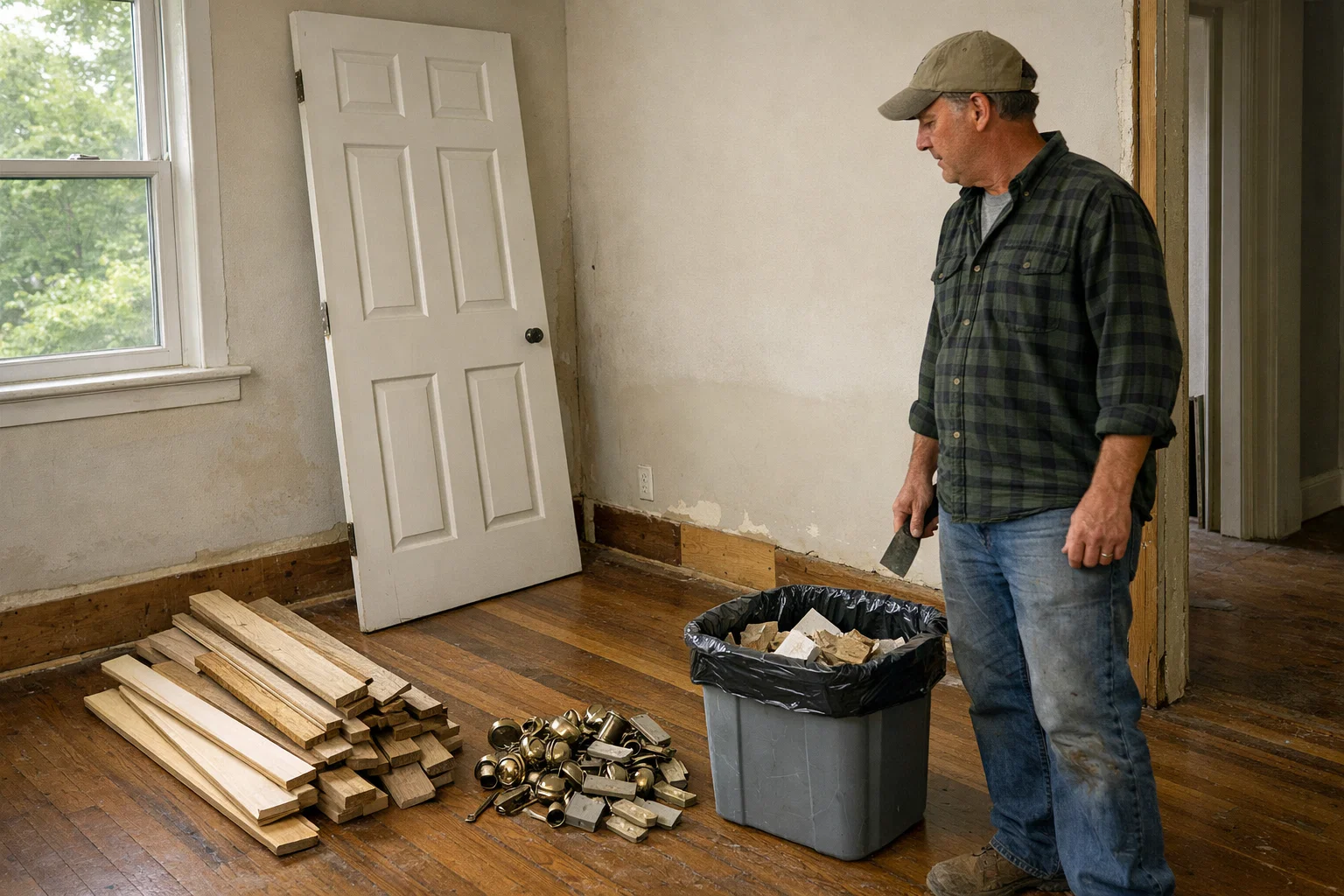
When homeowners prepare a property for sale, this hierarchy becomes a simple roadmap. Any small renovation or update, removing a door, replacing trim, detaching cabinets, produces materials that fall under DEEP’s description of C&D debris. Handling those materials responsibly means aligning with the order DEEP sets, which also aligns with broader connecticut recycling rules.
The state guidance also notes that “small contractors and homeowners engaging in remodeling projects” should contact their municipal recycling coordinators for details on local requirements. This is a straightforward step that fits naturally into real estate timelines. Before a seller disposes of anything removed during prep work, the town can clarify what should be reused, recycled, or taken to local facilities.
Reuse as the First Step in Reducing Construction Waste
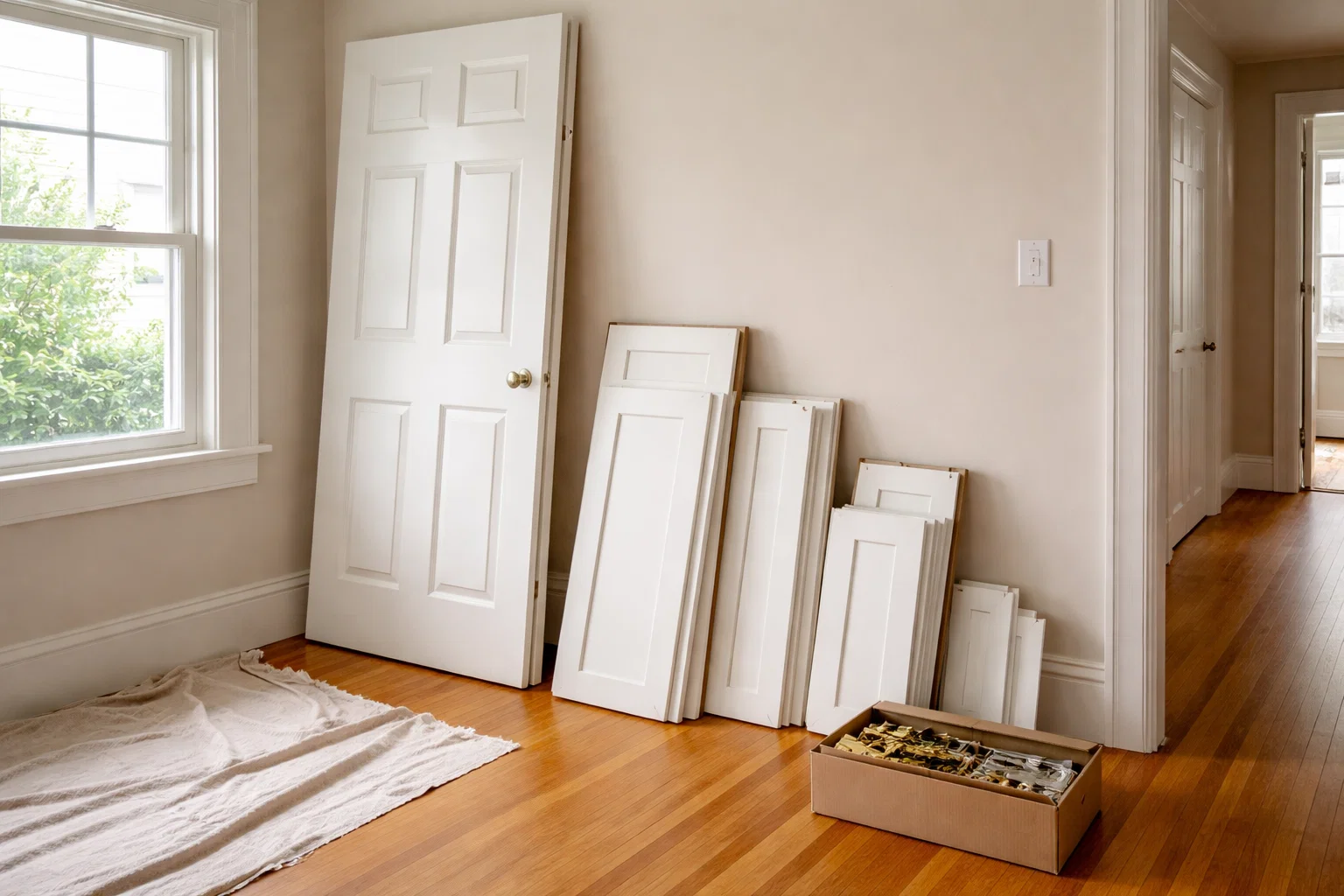
DEEP explicitly identifies reuse as a preferred management strategy. Many of the materials that come out of pre-sale updates, wood, fixtures, metal components, fall into reusable categories. This is exactly where sustainable materials Connecticut initiatives and ct reuse centers become part of the listing process, not an extra chore.
A seller removing a set of cabinet doors, taking out an interior door, or replacing old shelving is producing material DEEP classifies as C&D debris. Instead of disposal, aligning with the management hierarchy means finding reuse pathways. Centers that accept reclaimed building materials support this effort, and DEEP’s framework encourages this practice clearly.
In real estate, this matters because reuse reduces the volume of debris needing disposal and keeps more materials in circulation. It turns small updates into moments of environmental responsibility without requiring anything more than following the state’s own guidance.
Recycling Construction and Demolition Waste in Connecticut
When materials can’t be reused, DEEP lists recycling as the next preferred action. Wood, concrete, metals, and other C&D components have established recycling markets in Connecticut. Aligning home-prep waste with those streams is consistent with connecticut recycling rules and reduces the overall burden on municipal systems.
Even when a seller is only removing a few pieces of trim or broken shelving, those actions fall into the category of remodeling debris DEEP describes. Applying the state’s recycling hierarchy makes these small tasks part of a more responsible process, one that mirrors the framework designed for larger projects but scaled down to everyday homeowner activity.
This is where “deconstruction lite” shines: using the same priorities that govern large C&D operations but applying them in a simplified, homeowner-friendly way.
Why Reducing Construction Waste in Connecticut Matters in Real Estate
A small renovation that seems inconsequential still generates materials that fall under state guidance.
When sellers understand the DEEP hierarchy, they naturally move toward better decisions: reuse first, recycle second, dispose last.
This isn’t about perfection or large sustainability claims. It’s about aligning the smallest choices with the structure Connecticut already uses to manage C&D waste efficiently. It also supports the broader goals reflected in construction waste CT guidance, helping reduce unnecessary disposal and encouraging more responsible preparation for sale.
And when reuse and recycling become standard parts of pre-listing work, they integrate seamlessly with ct cleanout recycling, giving homeowners a practical way to reduce waste without changing their entire process.

Frequently Asked Questions
What counts as construction waste in Connecticut?
Construction waste includes materials like wood, drywall, metal, concrete, roofing, and fixtures removed during renovation, remodeling, or home preparation for sale.
Do small home renovations count as C&D waste?
Yes. Connecticut considers materials removed during even minor updates, such as cabinet replacement or trim removal, part of the construction and demolition waste stream.
What is “deconstruction lite”?
Deconstruction lite means applying reuse and recycling principles to small projects, keeping reusable materials out of disposal without requiring a full deconstruction process.
A Small Shift With Real Impact
DEEP’s framework for C&D materials is straightforward, and it fits naturally into preparing a home for the market. “Deconstruction lite” doesn’t demand large projects or specialized contractors. It simply asks homeowners to follow the state’s existing hierarchy when removing materials during pre-sale updates.
If you want to go deeper:
- To understand the emotional and material history behind reuse, read The Material Memory of a Connecticut Home.
- For the cost-side view of disposal, see What a Clean-Out Really Costs.
- If you want to see how these ideas connect to hidden building systems, explore Invisible Features.