Selling a home in Connecticut often begins with a familiar process: the Connecticut home clean out. Basements are emptied. Attics are cleared. Garages, sheds, and closets are finally addressed. Decades of accumulated belongings are reduced to a series of decisions—keep, donate, recycle, or throw away. For many sellers, the fastest option feels obvious. Rent a dumpster, fill it quickly, and move on.
Once the container is hauled away, the clean-out feels complete. But in Connecticut, a clean-out is not just a personal task or a logistical step toward listing a home. It is a moment that directly intersects with state law, municipal waste systems, and a waste infrastructure that is already under pressure. In Connecticut, a home clean out is governed by mandatory recycling rules, disposal bans, and reuse requirements that apply even during a sale.
How materials are handled during a clean-out affects far more than the property itself. A home sale is one of the few predictable moments when large volumes of material move through the waste stream at once. That makes the clean-out a turning point—not only for the home’s next chapter, but for how responsibly materials are managed at a system level.
Recycling Is Mandatory During a Connecticut Home Clean Out
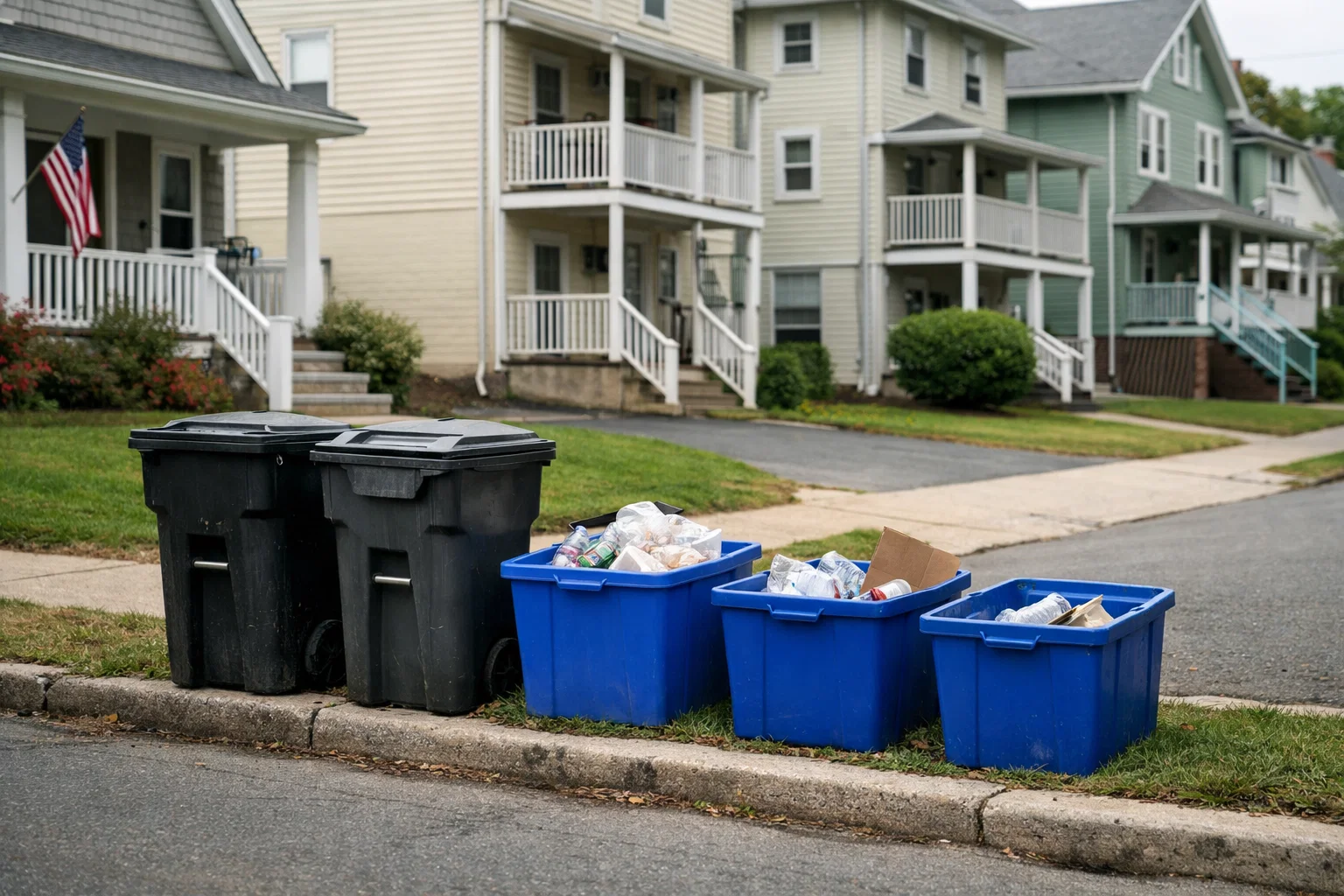
One of the most important facts homeowners overlook is simple: recycling is mandatory in Connecticut.
State guidance makes it clear that everyone must recycle. This requirement applies to:
- residents in single-family homes
- residents in multi-family buildings and condominiums
- businesses and non-profits
- public and private institutions
Recycling is not a personal preference or a best practice. It is a legal requirement enforced through state statutes, DEEP regulations, and local ordinances. During a clean-out, this matters because many of the items commonly discarded are designated recyclables, banned from disposal, or covered under product stewardship programs. These materials are not allowed to be thrown in the regular trash, even during a home sale.
What You Cannot Throw Away During a Connecticut Home Clean Out
Connecticut has established a clear framework that prevents specific materials from entering the waste stream through disposal. These restrictions exist for different reasons and operate through several mechanisms. Some materials are mandated for recycling, meaning they must be separated and handled through appropriate recycling programs. Others are banned from disposal entirely, while additional products are managed through extended producer responsibility (EPR) or deposit programs.
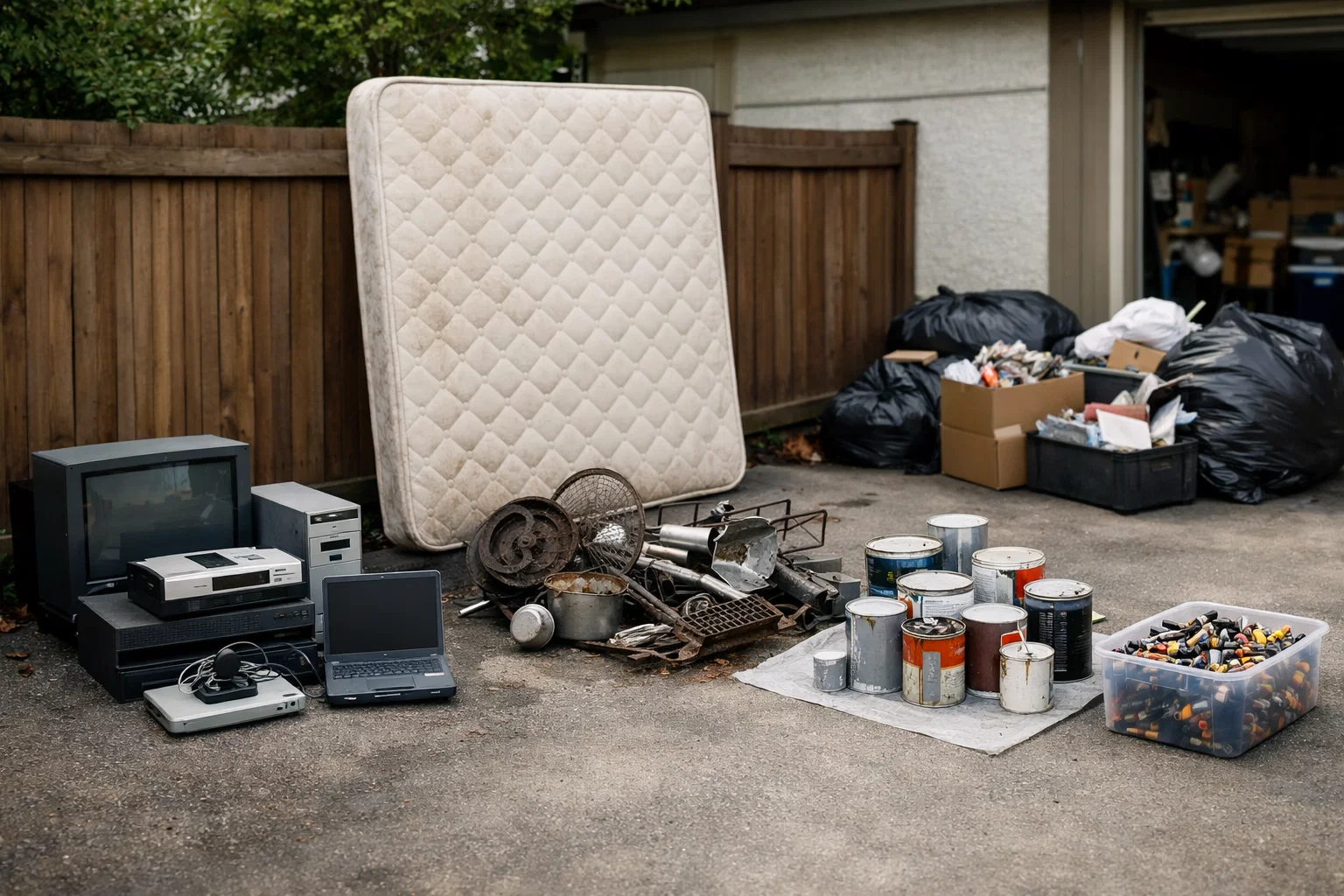
Examples of materials that commonly appear during home clean-outs and are restricted from disposal include:
- scrap metal and appliances
- lead-acid and motor vehicle batteries
- rechargeable batteries
- waste oil
- leaves and grass clippings
- certain electronics such as televisions, monitors, printers, and computers
- mattresses
- paint
- mercury thermostats
Many of these items are managed through multiple systems, including municipal recycling programs, product stewardship collection networks, and deposit programs. What matters for sellers is that these materials cannot simply be thrown away, even when time is limited or a property is changing hands.
Clean-Outs Create Large, Concentrated Waste Streams
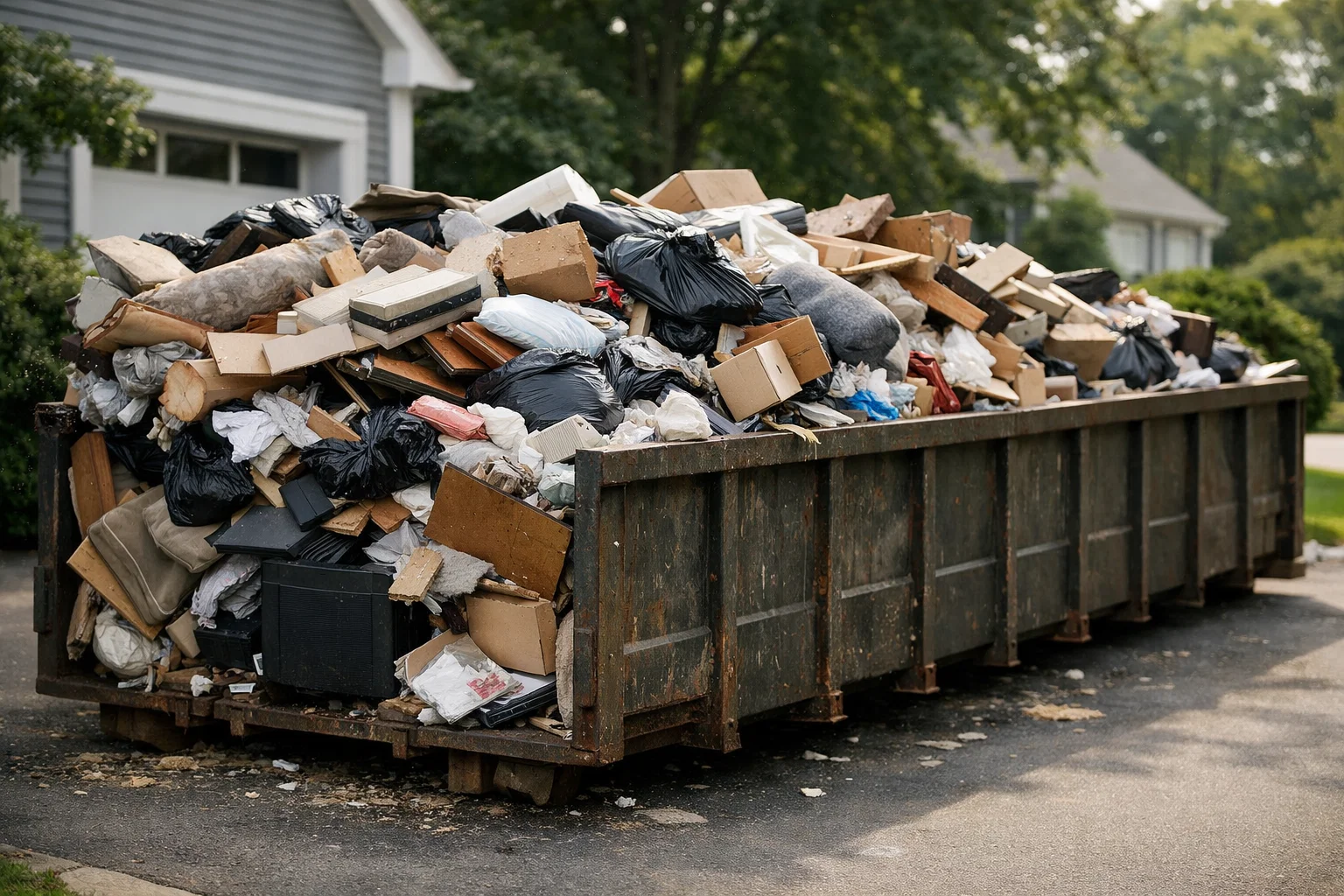
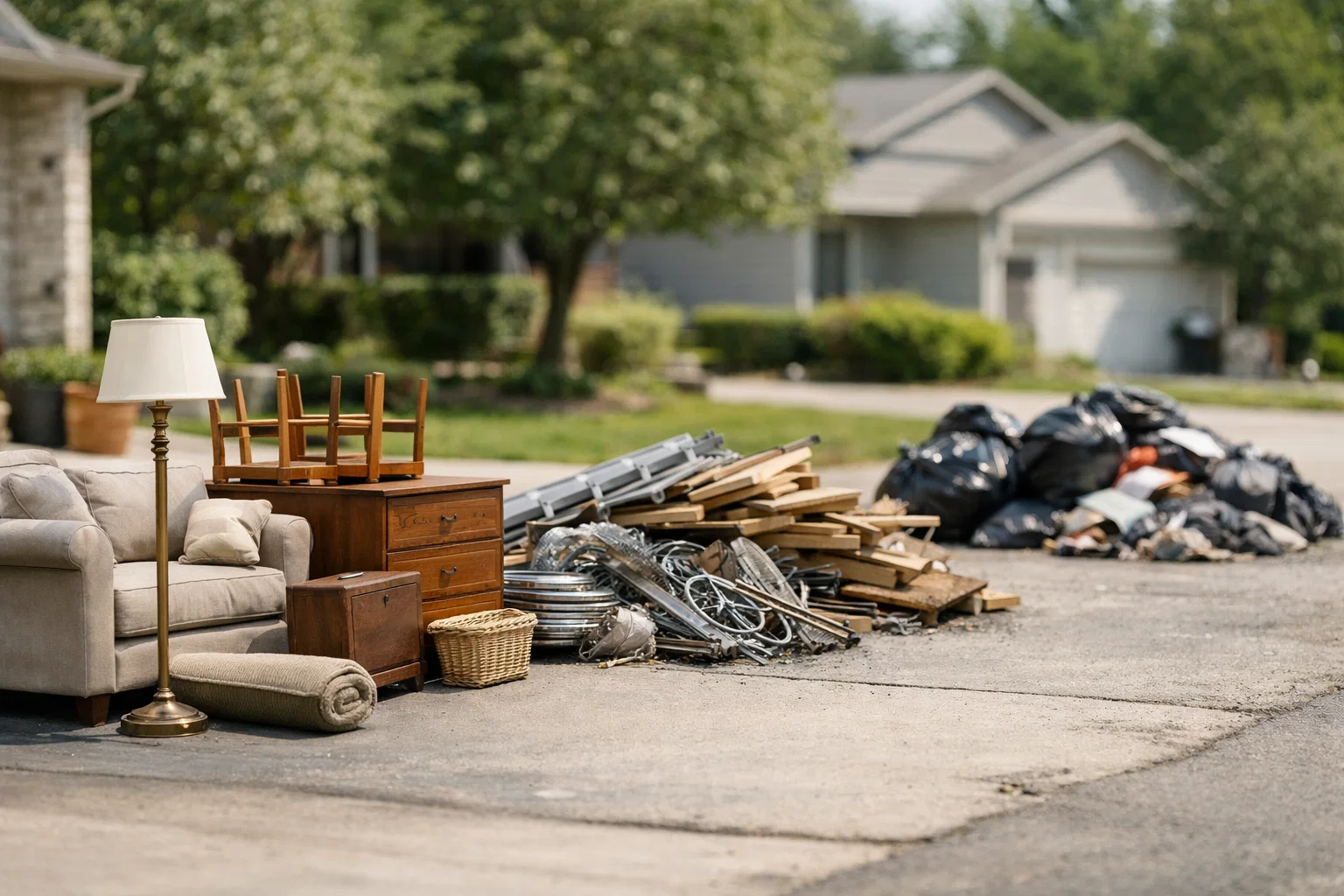
The Connecticut Green Bank Waste & Recycling Primer highlights a core challenge facing the state: waste generation is rising while disposal capacity is constrained. Connecticut relies on a limited number of disposal facilities and increasingly depends on exporting waste out of state. A clean-out concentrates waste decisions into a short window. Instead of gradual disposal over years, an entire household’s worth of materials moves at once. That scale makes clean-outs especially consequential for the waste system.
When reusable or recyclable materials are placed into dumpsters and sent to disposal, they:
- increase landfill or incineration loads
- bypass existing recycling and reuse infrastructure
- add pressure to municipal waste handling systems
- undermine diversion goals outlined in state guidance
This is why clean-outs matter beyond the property line. They represent a moment when correct sorting, reuse, and recycling can significantly reduce unnecessary disposal.
Connecticut’s Waste Hierarchy Applies to Home Sales Too
State guidance consistently emphasizes a simple hierarchy:
- reduce
- reuse
- recycle
- dispose
Disposal is the last option, not the default. During a clean-out, this hierarchy becomes practical. Many materials removed from a home are still usable or recyclable. Fixtures, appliances, wood, metal, furniture, and architectural elements often retain value within reuse and recycling systems.
DEEP guidance explicitly encourages homeowners to prioritize reuse and proper recycling before disposal. This is not framed as an aspirational environmental goal, but as a necessary approach to managing limited waste capacity. A clean-out that ignores this hierarchy works against the state’s waste management objectives. A clean-out that follows it supports them.
Multi-Family Homes and Condominiums Are Not Exempt
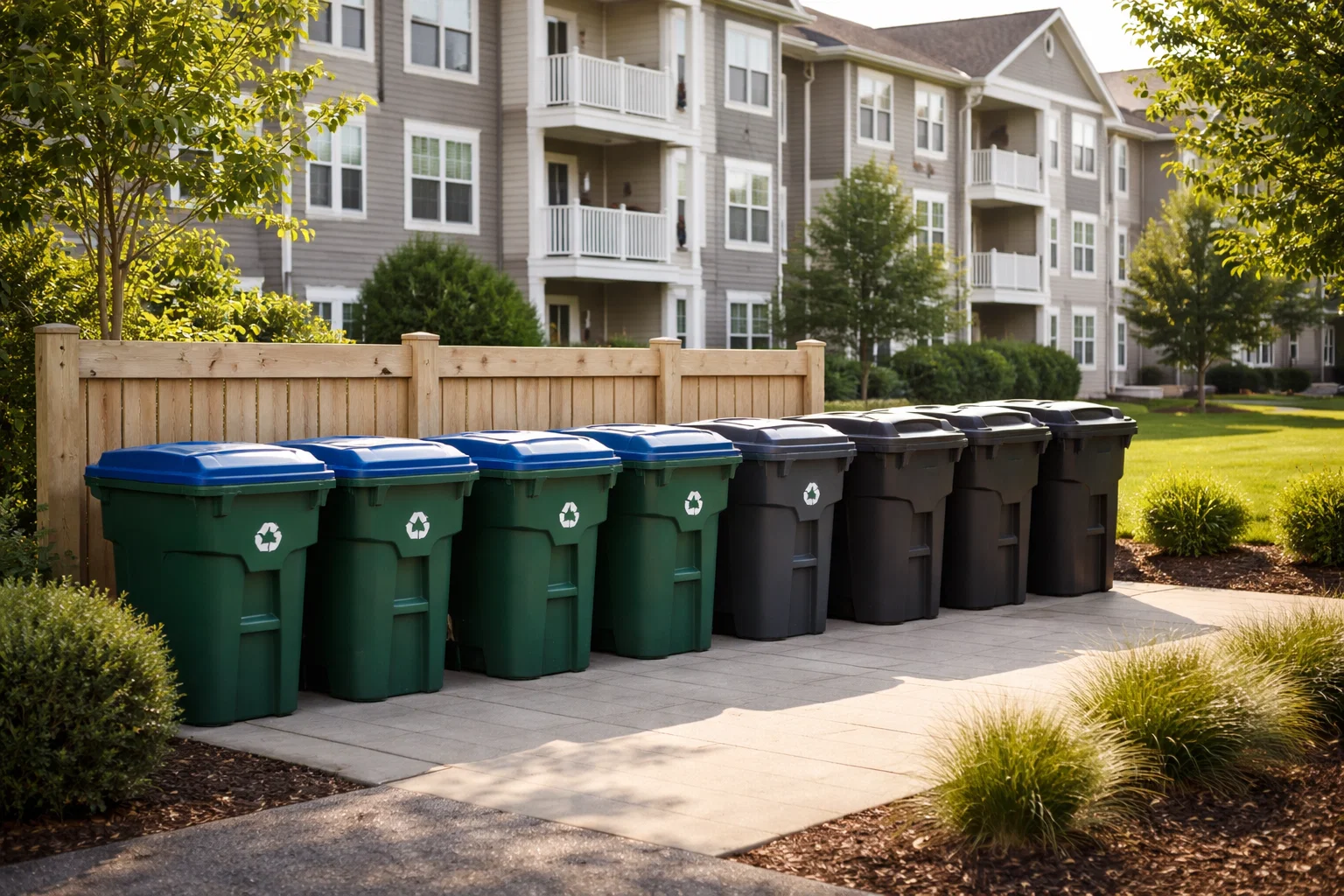
Recycling requirements apply equally to apartment buildings and condominium complexes. Landlords, property managers, and associations are responsible for ensuring that recyclables are separated and handled properly. This is especially relevant during unit turnovers and sales, when large volumes of material may be removed quickly.
State statutes assign responsibility for recycling compliance regardless of whether a property is owner-occupied or rented. A clean-out that occurs during a sale does not suspend these obligations.

The Role of Haulers and Why It Matters During Clean-Outs
Connecticut law also places specific requirements on waste haulers. Haulers must:
- provide recycling services equal to trash services
- avoid knowingly mixing designated recyclables with trash
- assist municipalities in identifying loads with excessive recyclables
- submit loads for inspection at disposal facilities
Loads containing significant amounts of recyclables may be rejected, creating delays and additional costs that can be passed on to customers. For sellers, this reinforces an important point: mixing everything into a single dumpster is not only environmentally problematic, it can create logistical and financial issues.
Proper separation during a clean-out is not just compliance; it reduces the risk of rejected loads and unnecessary complications during an already time-sensitive process.

Reuse and Recycling Options During a Connecticut Home Clean Out
Connecticut has multiple reuse and recycling pathways beyond standard curbside collection. Many municipalities support additional programs for items such as:
- food scraps
- mattresses
- books
- eyeglasses
- construction and demolition materials
- household goods through reuse or swap programs
DEEP and RecycleCT guidance point residents toward these options because reuse avoids disposal entirely, extending the life of materials and reducing strain on waste facilities. A clean-out that uses these pathways keeps materials in circulation instead of sending them directly to disposal.

Clean-Outs and the Real Estate Process
A responsible clean-out is not about branding a listing as “green.” It is about preparing a home in a way that aligns with state law, municipal systems, and basic stewardship. Homes that are cleared thoughtfully are easier to evaluate, easier to maintain, and easier to transition to new ownership.
Materials removed responsibly do not create downstream problems for buyers, municipalities, or waste facilities. This is not about assigning moral weight to a sale. It is about recognizing that a home transaction is a moment when choices scale up.
Why This Matters Right Now in Connecticut
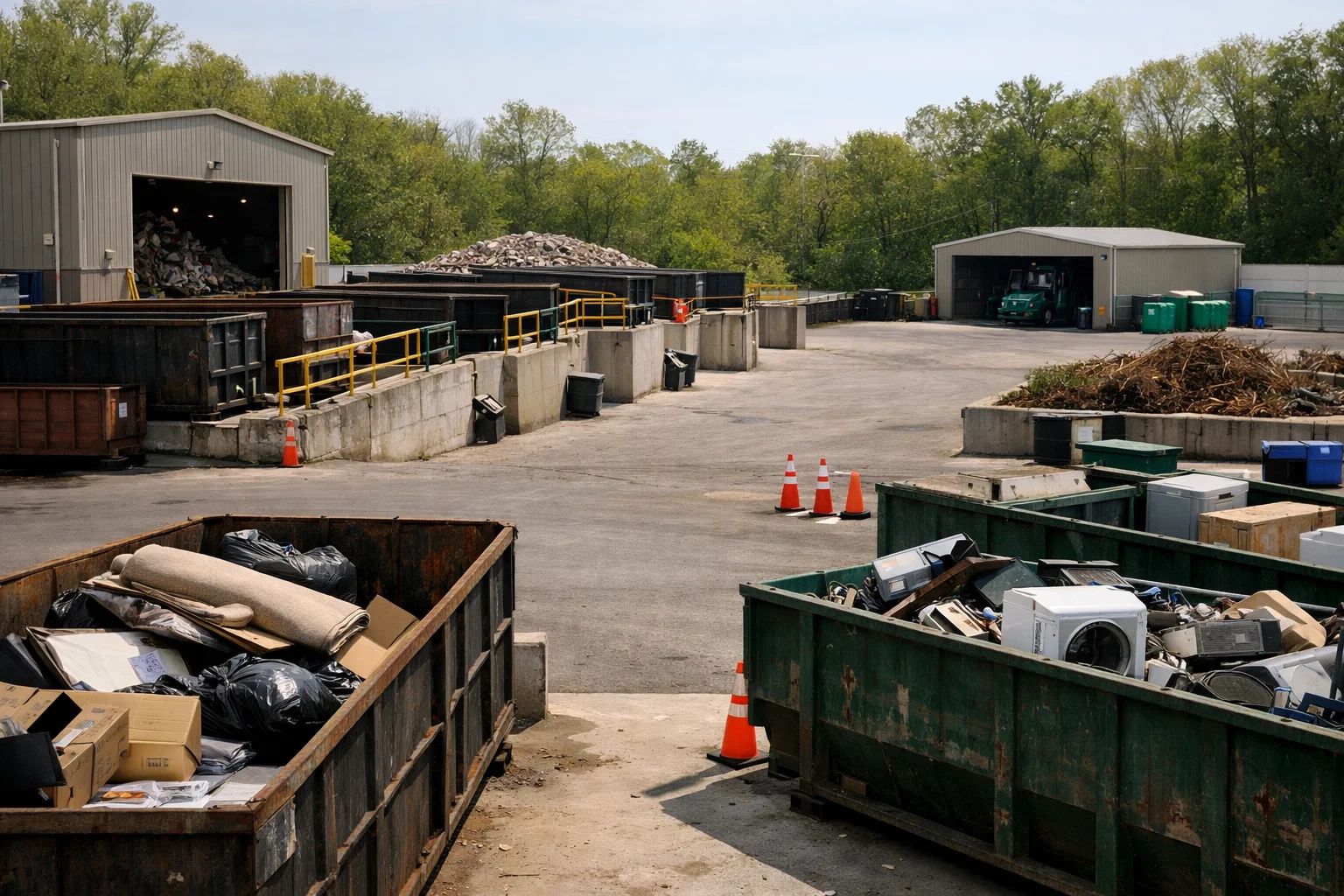
The Connecticut Green Bank Waste & Recycling Primer is explicit: business-as-usual disposal habits are not sustainable. Waste volumes continue to grow, while disposal options remain limited. Increasing diversion through recycling and reuse is not optional, it is necessary. Home sales are one of the few moments when waste decisions are both predictable and concentrated. Clean-outs happen whether or not anyone plans for them. The question is how they are handled.
A clean-out that follows Connecticut recycling rules and reuse guidance supports broader state goals to:
- reduce waste
- extend material life
- protect disposal capacity
- normalize proper recycling behavior
A clean-out that ignores those rules works against those goals.
The Clean-Out as Stewardship, Not Perfection
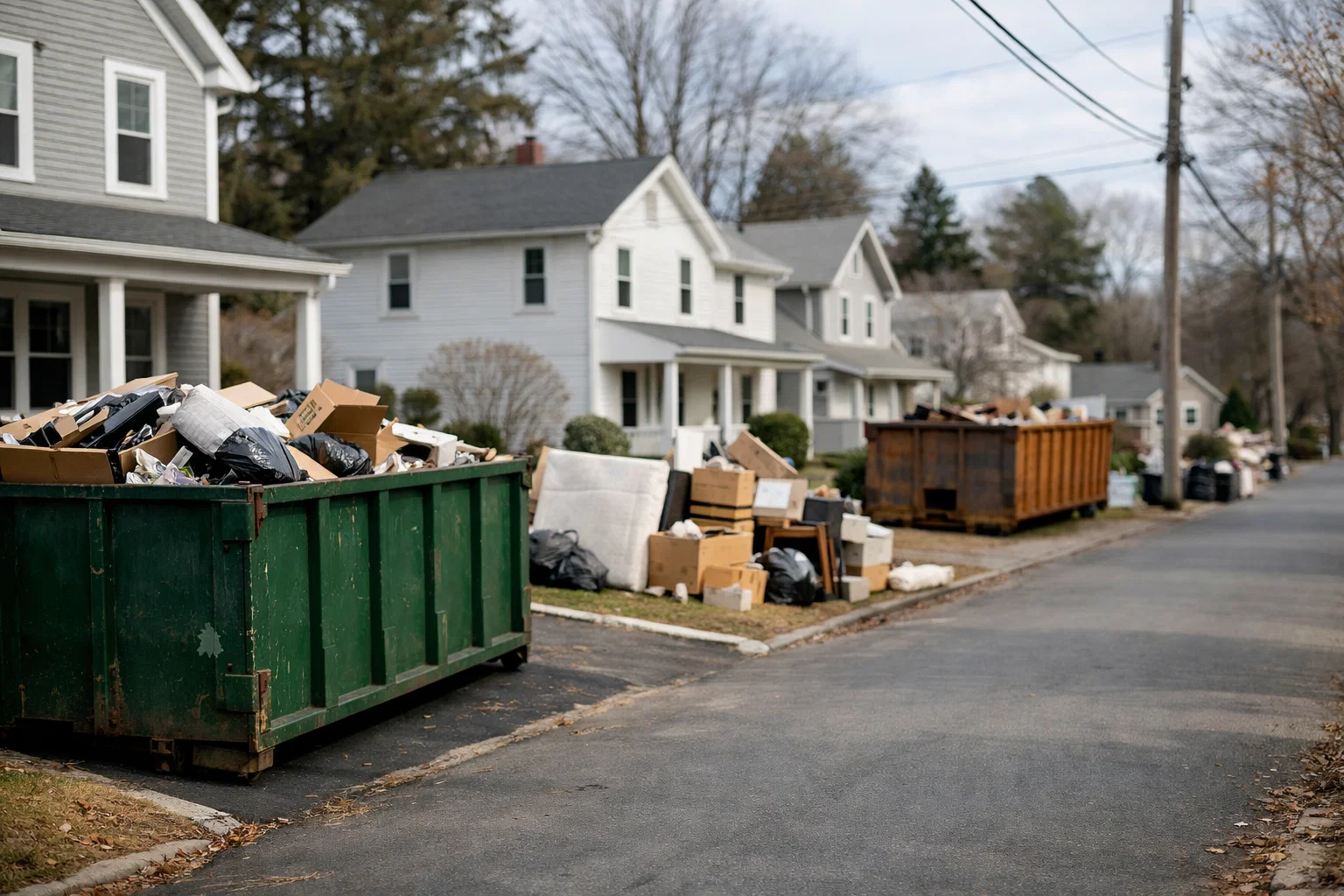
A responsible clean-out does not require perfection. It requires intention.
It means recognizing that:
- recycling is mandatory
- some materials cannot legally be thrown away
- reuse is preferred where possible
- disposal should be the last option
When homeowners take these principles seriously, they reduce unnecessary waste and contribute to a system that is already under strain. This work is not glamorous. It does not come with guarantees or visible rewards. But it matters.

Frequently Asked Questions
Is recycling mandatory during a Connecticut home clean out?
Yes. Connecticut law requires recycling for residents, businesses, and institutions, including during home clean outs related to a sale.What items are banned from disposal in Connecticut?
Items such as electronics, mattresses, scrap metal, batteries, paint, and certain appliances cannot legally be thrown in the trash.Can I throw everything into a dumpster when selling my home?
No. Dumpsters may not accept loads containing banned recyclables, and haulers can reject or surcharge improperly sorted clean-out waste.A Better Sale Begins With a Better Clean-Out
A home sale is a transition. The clean-out is the last moment a seller influences what happens to the materials accumulated in that home. Handled responsibly, a clean-out aligns with Connecticut law, supports municipal waste systems, and keeps valuable materials in circulation. Handled carelessly, it accelerates disposal and adds pressure to a system that cannot afford it.
Responsible clean-out recycling in Connecticut is not a trend or a niche idea. It is an extension of existing law, guidance, and infrastructure. A better sale does not begin with a dumpster. It begins with understanding what cannot be thrown away, and why that matters.
If you want to go deeper:
- For a look at how material reuse supports sellers, see The Material Memory of a Connecticut Home.
- To explore practical strategies that reduce waste, read The Case for Deconstruction Lite.
- If you want to understand how visible and invisible upgrades are considered during valuation, explore How Energy Features Affect Home Value in Connecticut.